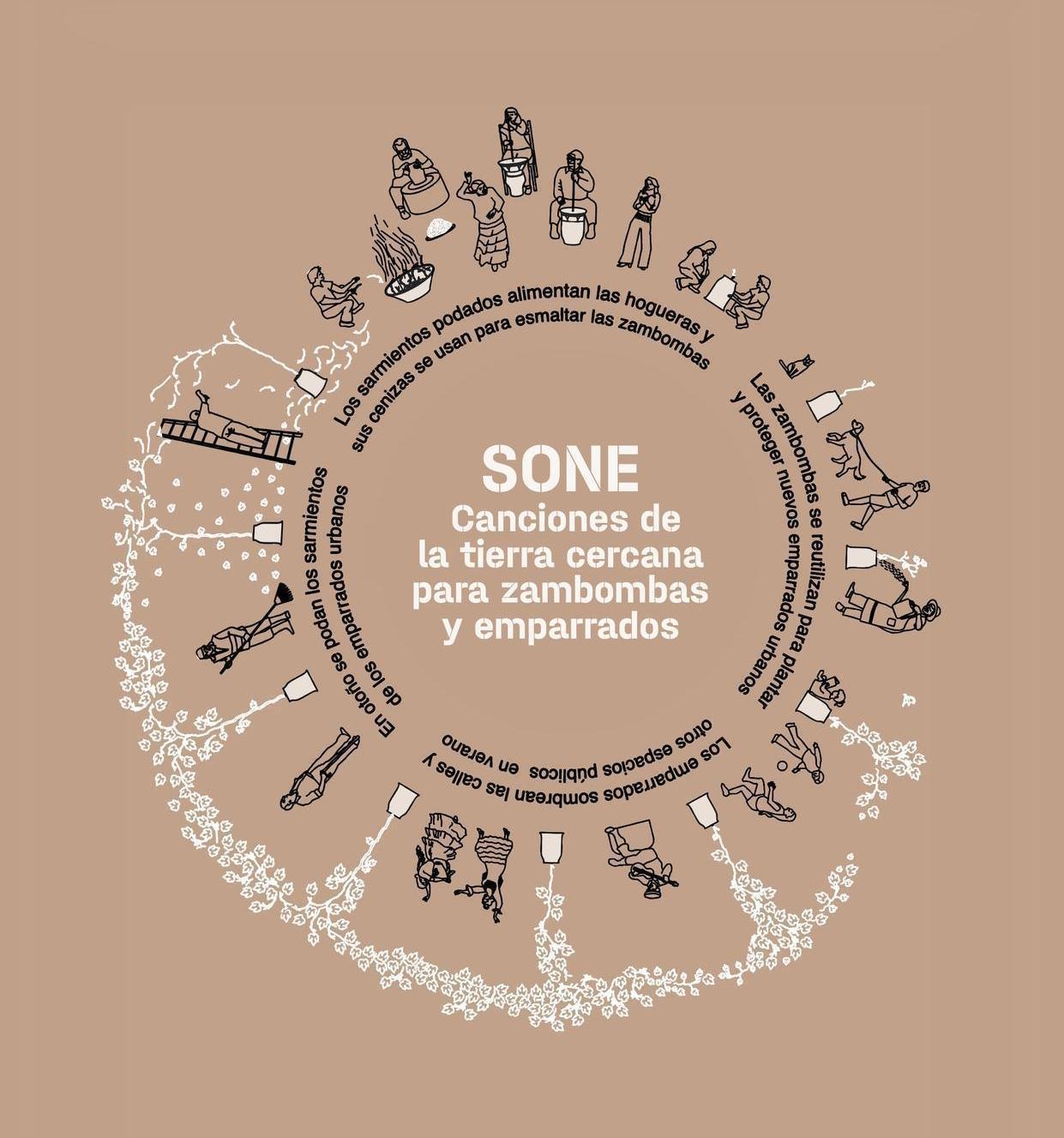
SONE
En 1974 la temperatura media en Jerez de la Frontera fue de 16,9ºC. En 2024 fue 2ºC superior. 4ºC más si hubiéramos tomado como referencia la media de las temperaturas máximas.
En este contexto de calentamiento global, SONE explora estrategias locales de adaptación climática entrelazando prácticas paisajísticas como los emparrados urbanos con rituales tradicionales como las zambombas. Dos procesos aparentemente desconectados pero unidos materialmente a través de las vides que, podadas al final del otoño, alimentan con sus sarmientos los fuegos alrededor de los cuales se celebran dichas fiestas populares.
En este marco, el proyecto explora la capacidad de los rituales colectivos para impulsar procesos de renaturalización urbana. Así, frente al desarrollo de soluciones genéricas, esta iniciativa se interesa por la conjunción de conocimientos y prácticas locales que permitan renovar de manera colectiva nuestra relación con el paisaje.
Con este objetivo, se reúnen en esta exposición agentes, recursos y saberes de Jerez que, realineados, nos recuerdan que la adaptación climática no pasa exclusivamente por la adopción de nuevas tecnologías, sino por reactivar el potencial estético, simbólico y vital de los paisajes que habitamos.
***
SONGS OF NEARBY EARTH (SONE)
In 1974, the average temperature in Jerez de la Frontera was 16.9ºC. In 2024, it was 2ºC higher. It would have been 4ºC higher if we had taken the average maximum temperatures as a reference.
In this context of global warming, SONE explores local climate adaptation strategies by intertwining landscaping practices such as urban vineyards with traditional rituals such as zambombas. These are two seemingly unrelated processes, but they are materially linked through the vines which, pruned at the end of autumn, feed the fires around which these popular festivals are celebrated with their shoots.
Within this framework, the project explores the capacity of collective rituals to drive urban renaturalisation processes. Thus, rather than developing generic solutions, this initiative focuses on the combination of local knowledge and practices that enable us to collectively renew our relationship with the landscape.
With this objective in mind, this exhibition brings together agents, resources and knowledge from Jerez which, when realigned, remind us that climate adaptation does not only involve the adoption of new technologies, but also the reactivation of the aesthetic, symbolic and vital potential of the landscapes we inhabit.
 Powered by